
 Marc Cellucci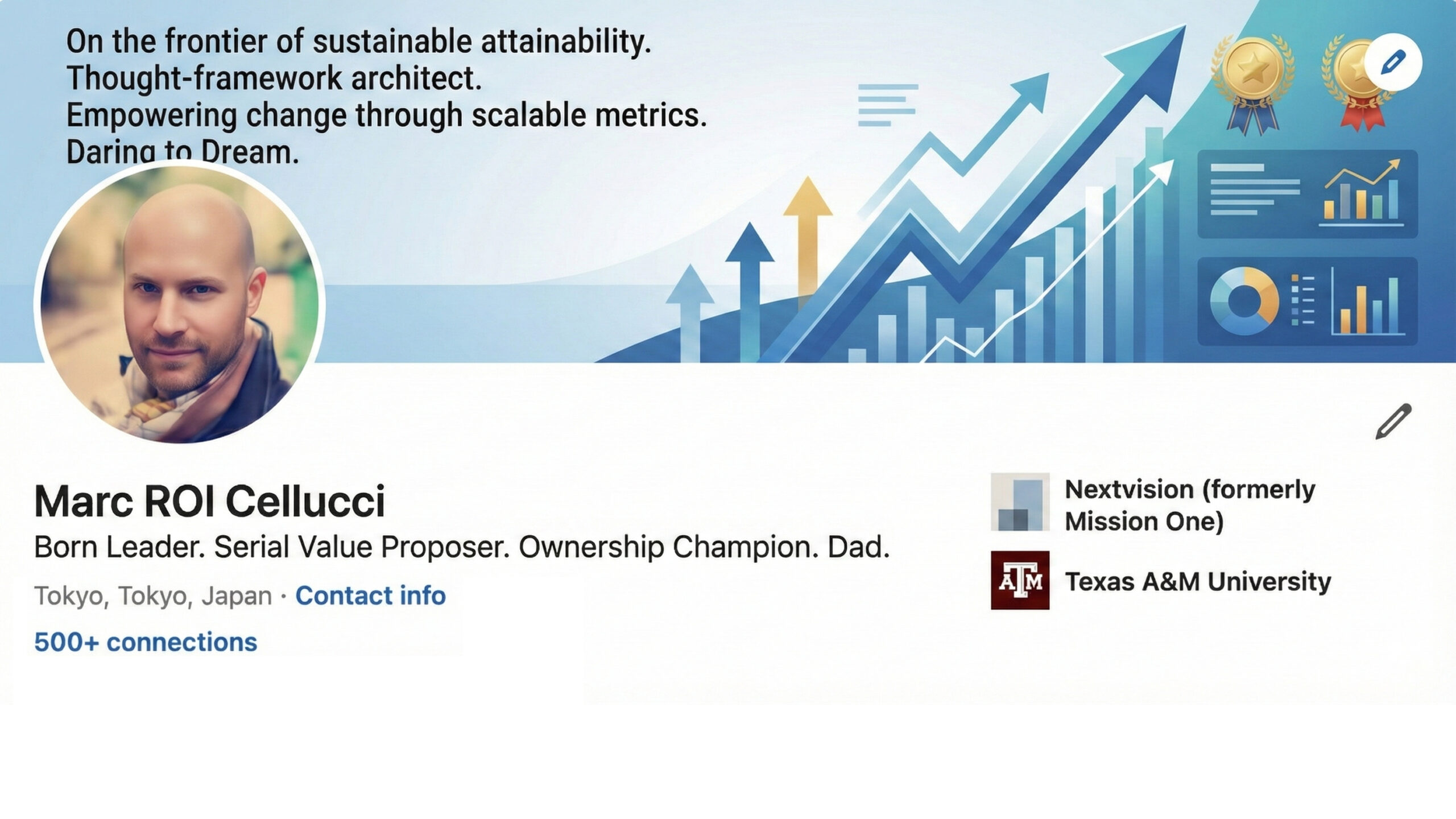
The SNS for Boring People
I hate the way you write on LinkedIn. I really do.
It’s in the way you craft your artisanal epithets for greater perceived impact, grammatical norms be damned. It’s in the way you cover up what you want to say with a thick, greasy layer of catchphrases and buzzwords.
Maximum bloviation. Minimal meaning.
What I sometimes call “the SNS for boring people” has become a nearly indispensable tool for business, and I begrudgingly use it daily. But reading some LinkedIn posts makes my Journalism degree spin around in its frame, straining to return to the tree from which it came as it finally gives up on humanity.
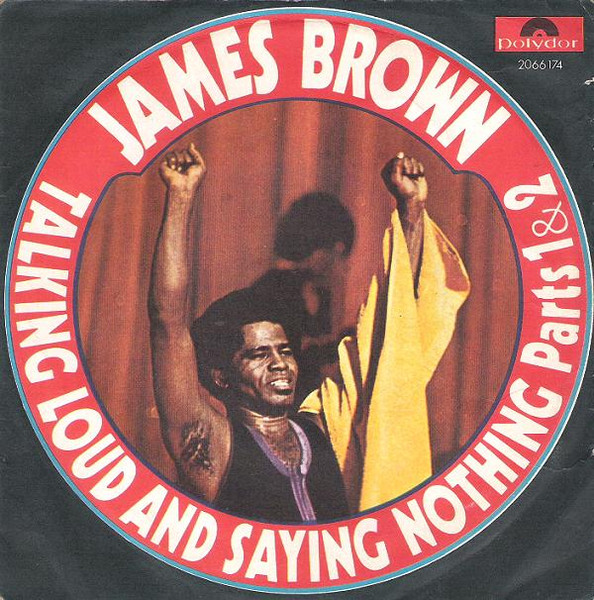
To borrow from the great James Brown, people on LinkedIn are just talkin’ loud and sayin’ nothin’. So let’s learn from the Godfather, and take that dull knife and make it cut.
The Power of the Pilcrow
There was a time when people wrote in long, continuous blocks of text. Remnants of this still exist today, in texts from punctuationally-challenged family members and social media posts from certain world leaders.
Our Greek friends back in the 4th century BCE came up with an ingenious way to divvy things up into separate blocks of thought, called the paragraphos. It even had a cool symbol — ¶. With this, you could break things up in a more digestible, meaningful way.
But in time, the mass attention span of humanity was whittled down to a nub, and modern Homo sapiens lost the bandwidth to deal with even small blocks of text. So here we are, in a society that has shunned the brilliant invention of the paragraph.
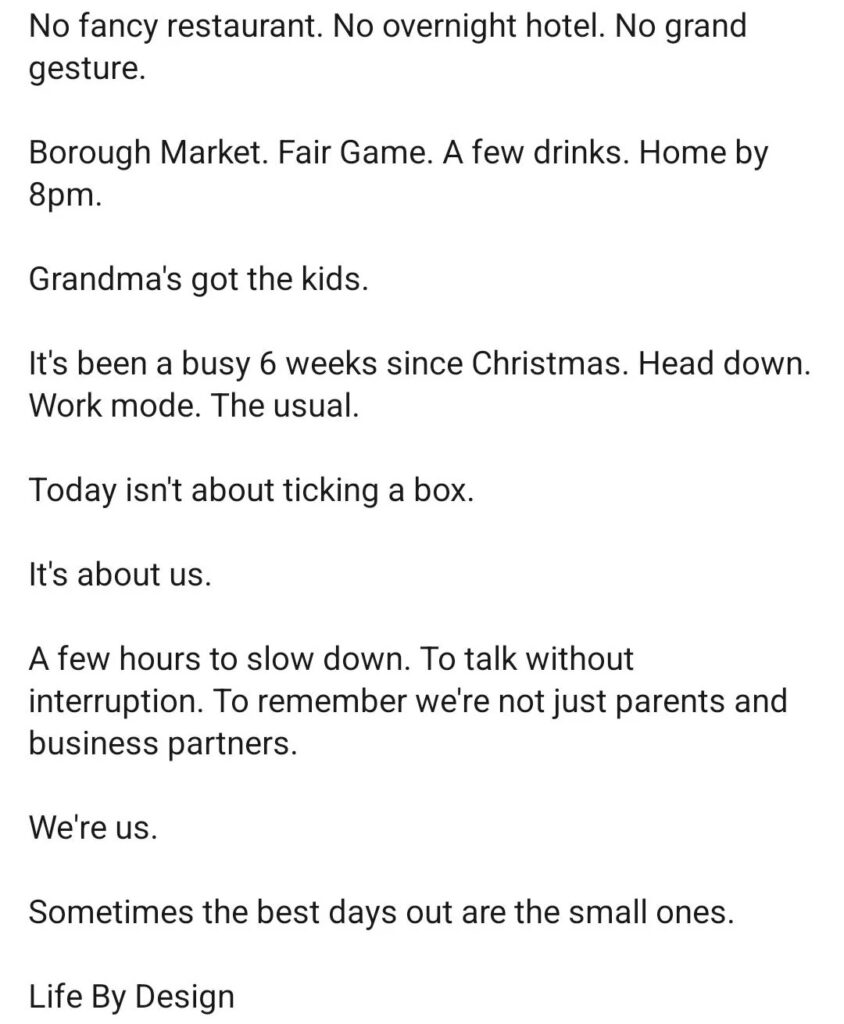
Single sentences can have a lot of impact.
But not if you use them over and over again.
Do that, and you’re basically pouring truffle oil all over your writing.
It gets tiring.
It lessens impact.
Your points get lost.
Your. Message. Is. Diluted.
Uh oh…
Subject. Verb. Object.
I wasn’t there at the time, but I assume it was quite the revelation when cavemen stopped grunting single sounds, and strung them together with other grunts to create fully realized concepts. However, some folks on LinkedIn feel the need to turn back the clock, and croak out single words and act like they are grand statements.
Thought-leader. Innovator. Dad.
Wherein my Associated Press Stylebook busts into flames. We’re better than this, y’all. I’m not saying you have to diagram your sentences, but you have to construct them if you want to earn the right to use a period. Full stop. (Ugh.)
Two-word, no-verb-havin’ “sentences” are no better. Compare the following:
Thought-Leading Change Catalyst A:
“I found myself in a bad place, lacking direction, and making poor choices.”
Thought-Leading Change Catalyst B:
“It was a bad place. No direction. Poor choices. Douchey writing style.”
Who would you rather converse with over canapés at your next networking event?
Think You Know Something? Think Again!
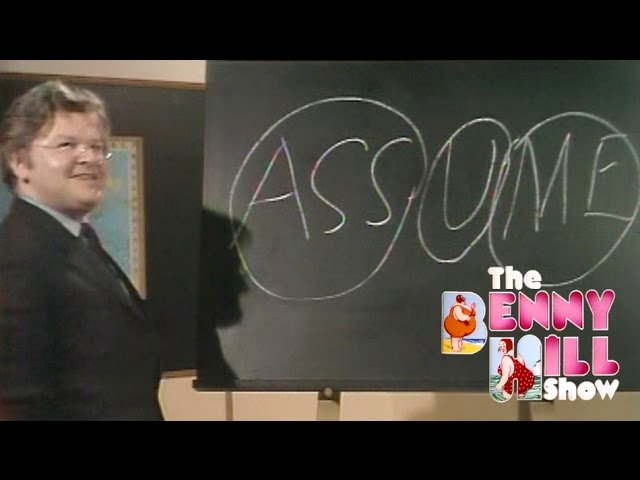
Making assumptions about the reader is just straight up rude. You see it a lot, and it’s all basically variations of the old “Think you [verb] [noun]? Think again!” trope.
Here’s something you haven’t thought of.
You’re asking the wrong question.
It’s worse than you think.
You’ve been doing it all wrong.
You’re missing out.
Who are you, with your standing desk and grande matcha, to make assumptions about me?
I intentionally used this technique at the beginning of this article (and in the previous sentence), despite the hurt it put on my soul. It’s a cheap challenge, a weak-sauce attempt to make the reader say “nuh-uh!” and get caught in a validation loop that compels them to read the whole article. It looks down on the reader, who is the last person you should be looking down on.
And if you think it was easy to use it as my opening sentence — think again!
Achieving Scalable Velocity via a Plain Talk Paradigm

It was December of 1999, when a young man from San Antonio packed up his car, and drove west to start his career at SEGA. This was right in the heyday of the dot-com bubble, and this plain talkin’ Texan, with his y’alls and all y’alls, was about to learn a whole ‘nother language.
You didn’t use something, you leveraged it. You didn’t see how we could work together, you explored synergies. You didn’t talk after the meeting, you took it offline.

I hate this stuff. And sadly, a lot of it has become industry lexicon, which of course gave birth to more egregious misuse of words, to the point where LinkedIn posts look like a Jello salad of buzzwords — flashy presentation, but nobody wants to consume it.
As such, I am now actualizing a new, fully sustainable thought-paradigm — think of it as an efficiency hack to achieve a growth-aligned next-state — that provides a high-velocity messaging vector stressing ownership, accountability, and frictionless scale.
It’s called plain talk. Give it a try.
Empower This!
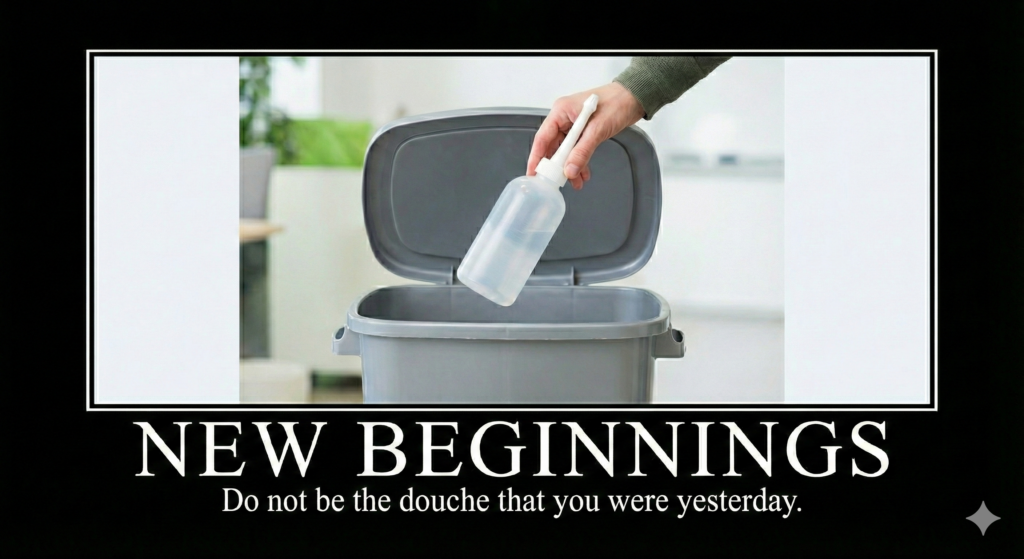
We’re all tiny little bags of meat on an insignificant planet in an infinite universe. Even so, it’s good to share your knowledge and experiences with others. It’s existentially vital to the social species that is humankind.
But not everything you say has to be paradigm-shifting, epoch-making, or needle-moving. Not all of your lines have to be suitable for framing. Lessons learned from unplugging during your beach vacation don’t have to make you a better manager.
So take your 365 days and 365 ways, and use them to say what you mean. Try talking straight, and stringing concepts together with the grammatical parts of speech that have elevated us beyond grunts and hisses.
As a business networking platform, LinkedIn is a good tool.
But you don’t have to write like one to use it.